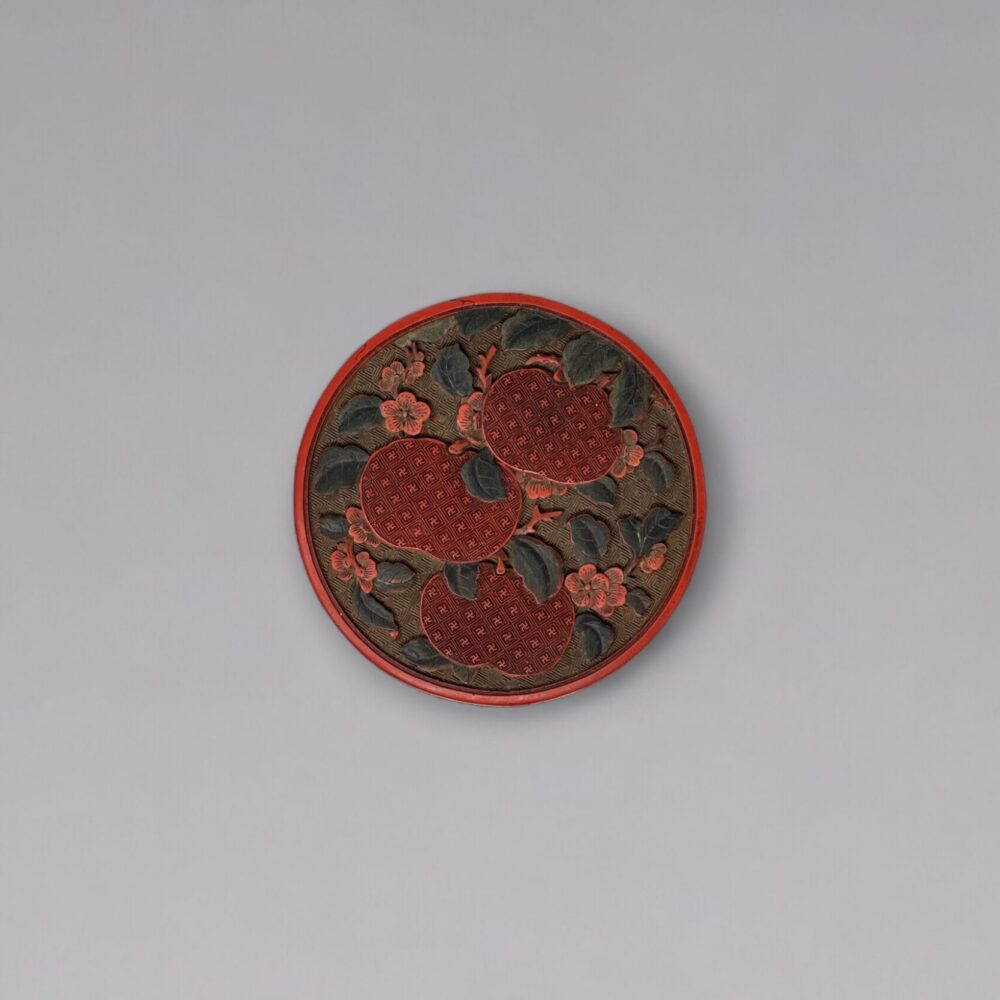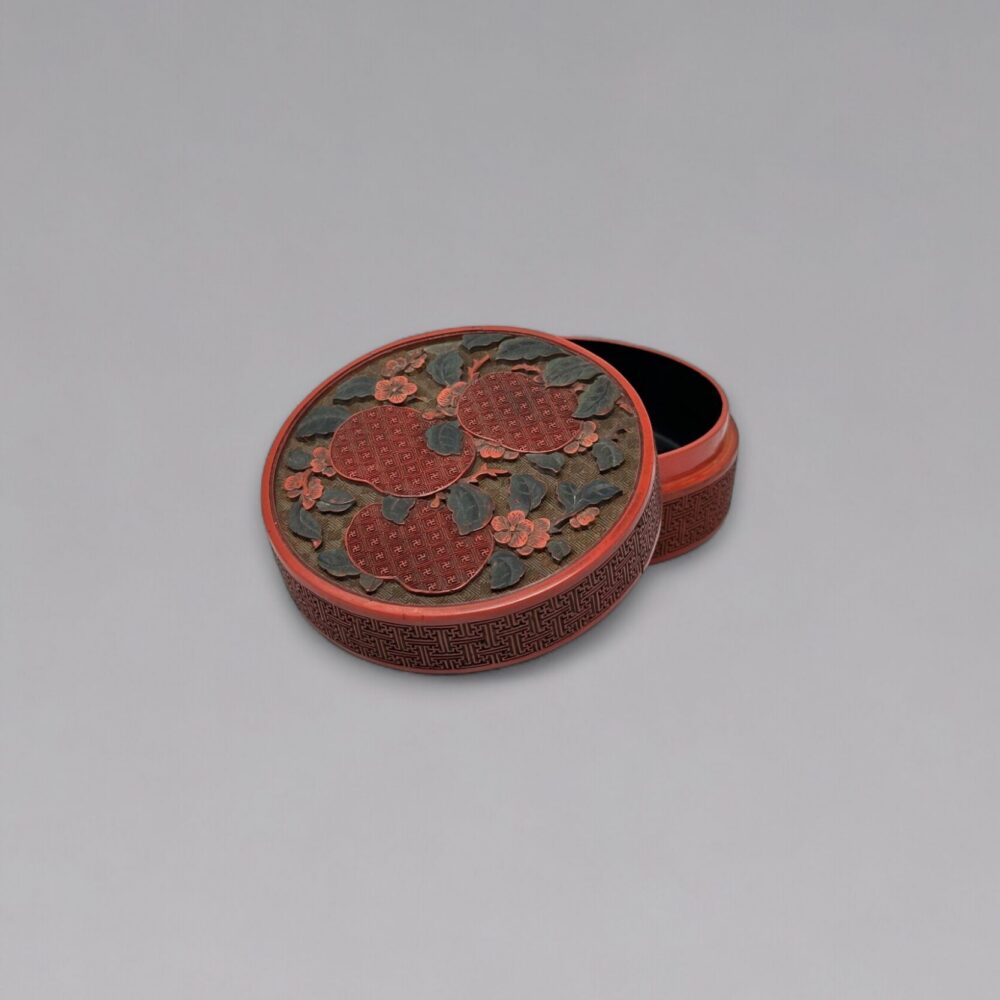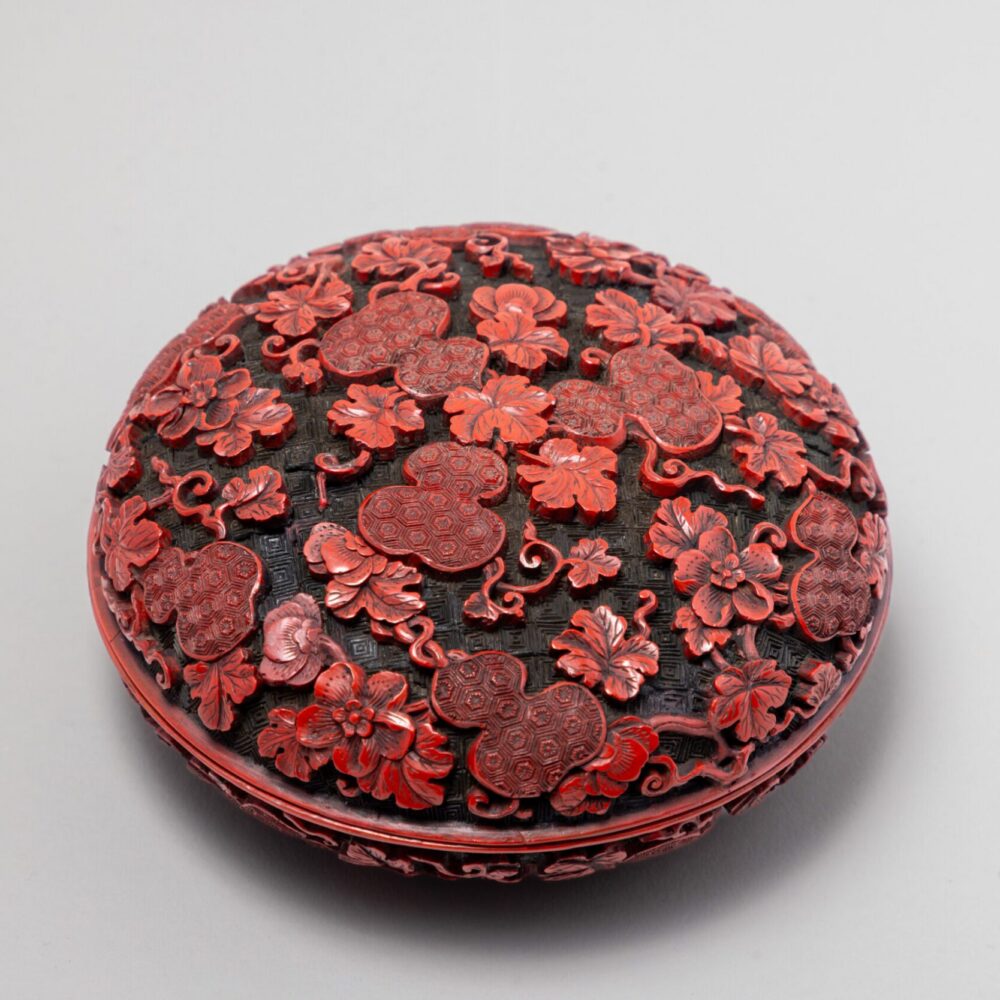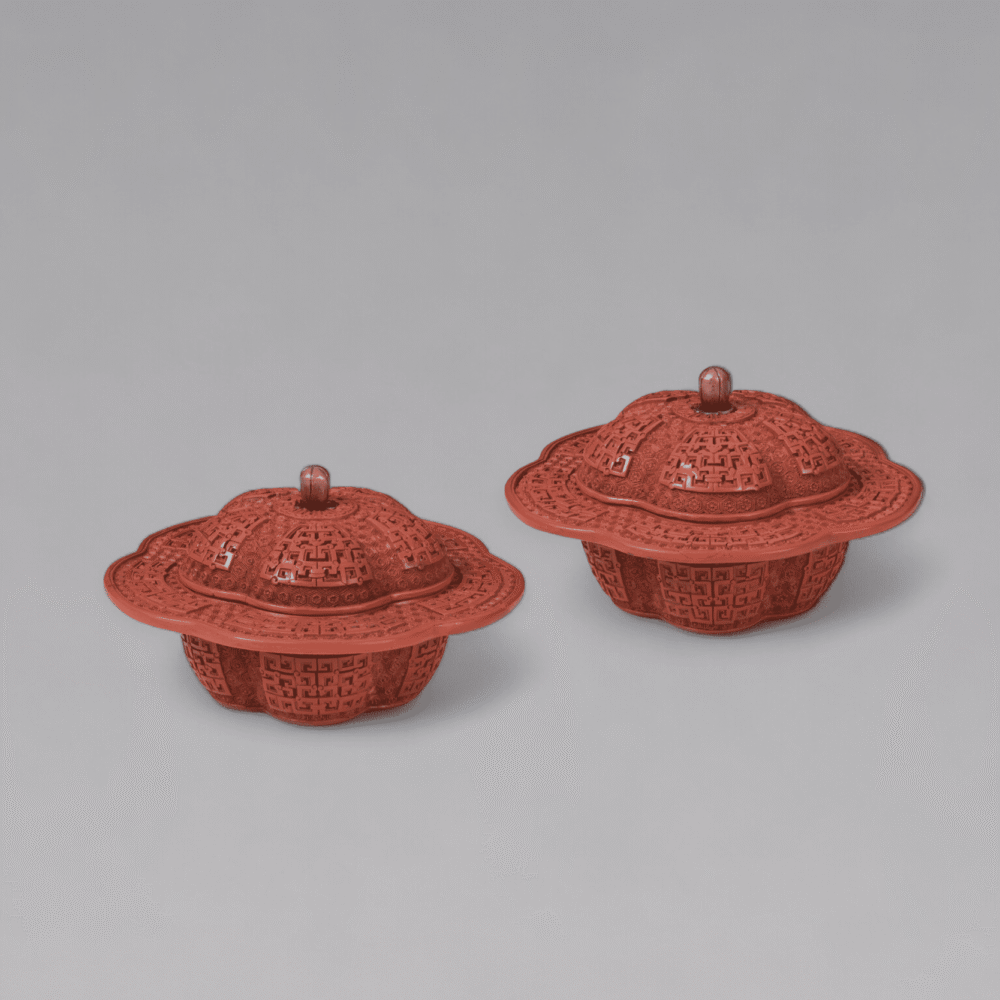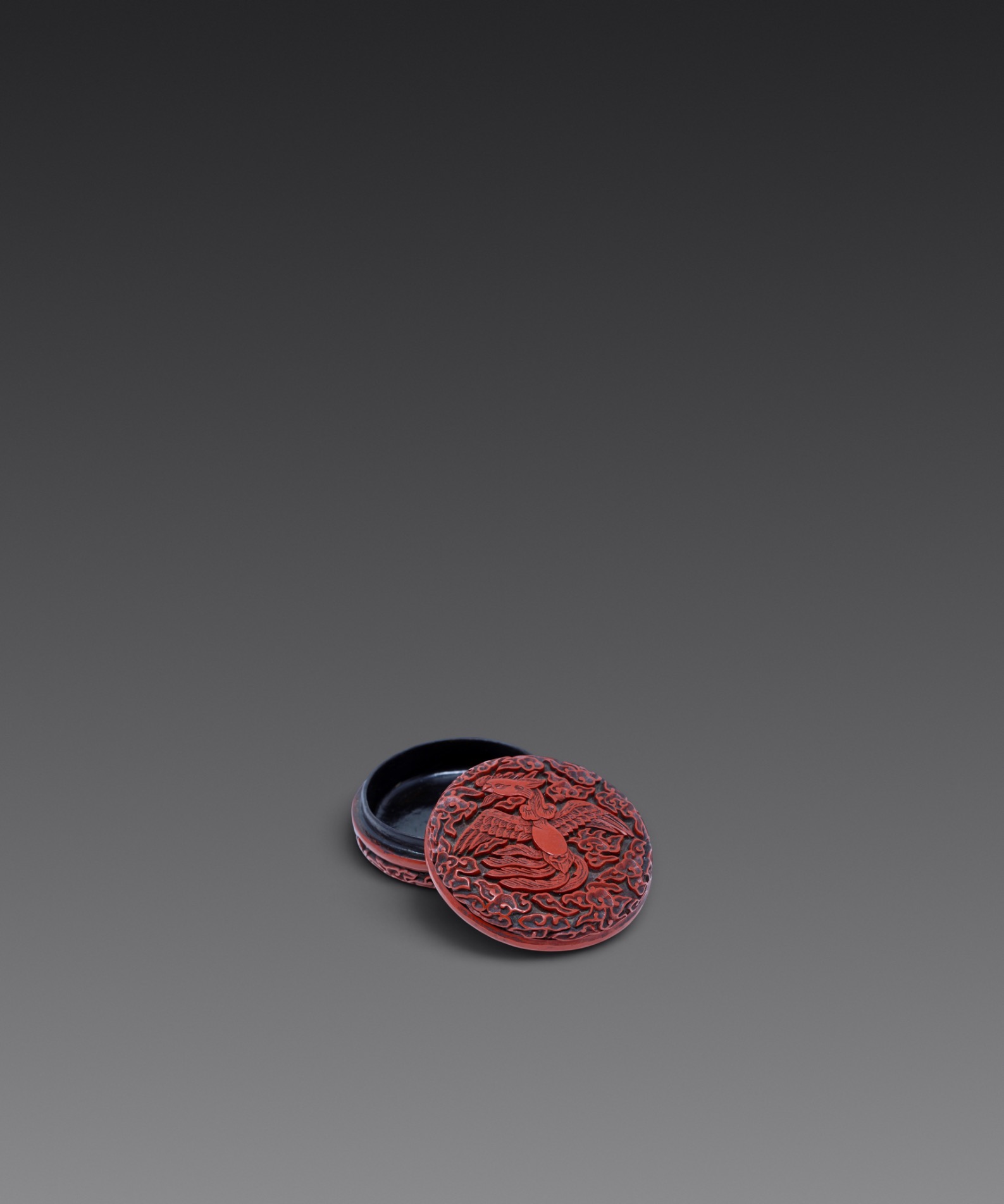
The cover and base of this small box are carved in red lacquer with a phoenix in flight among ruyi-shaped clouds, the dark ground providing a pronounced contrast to the raised decoration. The interwoven forms of bird and cloud give the surface a sense of movement, while the interior is finished in plain black lacquer. The box is constructed around a metal core, probably copper or brass.
A carved cinnabar lacquer ‘phoenix’ box and cover (Yuan/Early Ming dynasty)
Description
Dimensions:
Provenance:
The cover and base of this small box are carved in red lacquer with a phoenix in flight among ruyi-shaped clouds, the dark ground providing a pronounced contrast to the raised decoration. The interwoven forms of bird and cloud give the surface a sense of movement, while the interior is finished in plain black lacquer. The box is constructed around a metal core, probably copper or brass.
The phoenix, or fenghuang, was associated with virtue, peace and prosperity and formed part of the decorative repertoire of Yuan and early Ming lacquerware. The metal core is a noteworthy feature, distinguishing the box from examples constructed around a wooden support. It provides greater structural rigidity and allows a close fit between box and cover. This type of construction is attributed to an overlap between lacquer workshops and imperial metalworking foundries during the period, suggesting a possible connection with imperial workshop practice.
Additional information
| Period | Yuan/Early Ming dynasty |
|---|